
When the week is approached as a sequence rather than a collection of separate days, the relationship between portion, ingredient, and effort shifts in ways that sustained inquiry makes legible. The notebook kept across sixteen weeks of a deliberate meal-planning practice became, in time, a document of how a working week eats when it is thought about in advance.
The Week as a Unit of Nourishment
Most nutritional thinking, both in the published literature and in everyday conversation, regards the meal as its primary unit. A balanced meal, a good lunch, a satisfying dinner — these are the objects of analysis. The week, by contrast, receives less attention as a compositional unit, despite the fact that the week is the natural rhythm by which most people in the United Kingdom organise their time, their shopping, and their relationship to a kitchen.
The question that prompted this inquiry was simple: if a week of eating were mapped in advance, as a writer maps the structure of a long piece before beginning to draft it, what would the practice look like, and what would it produce? The answer, arrived at across sixteen weeks of field notes, is more interesting than the question might suggest.
A week of eating, when mapped in advance, reveals a set of structural constraints that are not visible when each day is planned separately. The cook who plans Monday's dinner without reference to Tuesday's lunch will cook a quantity of grain or legume appropriate to Monday's dinner alone. The cook who plans both simultaneously will often recognise that the grain or legume can serve both meals, with some adjustment of seasoning and accompaniment. This recognition is the beginning of considered meal planning — not in the sense of rigid preparation, but in the sense of structural awareness.

Portion Control as Structural Rather Than Restrictive
The language of portion control in the wellness literature tends to carry a certain disciplinary weight: portions are things to be managed, reduced, or carefully measured. This framing, while not without its uses in specific contexts, misses something important about how portion awareness functions in a planning-oriented kitchen.
When a week of meals is mapped as a sequence, portion sizes are not an exercise in restriction. They are an exercise in distribution. The question is not "how little can be eaten at this meal?" but "how much is needed at this meal, given what comes before and after it?" A week that includes a long Sunday walk, a working Tuesday without a proper lunch, and a low-activity Thursday will require different portions at different points not because of restriction but because of accurate distribution of nourishment across a varied sequence of days.
This reframing of portion control as structural rather than restrictive was one of the more significant findings of the sixteen-week field notes. Participants who approached the week's portions as a matter of distribution reported, consistently, less sense of restriction and greater sense of satisfaction across the week as a whole than participants who were managing portions on a per-meal basis.
"When a week of meals is mapped as a sequence, portion sizes are not an exercise in restriction. They are an exercise in distribution: how much is needed at this meal, given what comes before and after it?"
Sport, Movement, and the Nourishment Sequence
The relationship between physical activity and nutritional need is a subject that the field notes approached through observation rather than guideline. The question was not "what should an active person eat?" but "what does an active person, observed over time, actually eat, and what patterns emerge from that observation?"
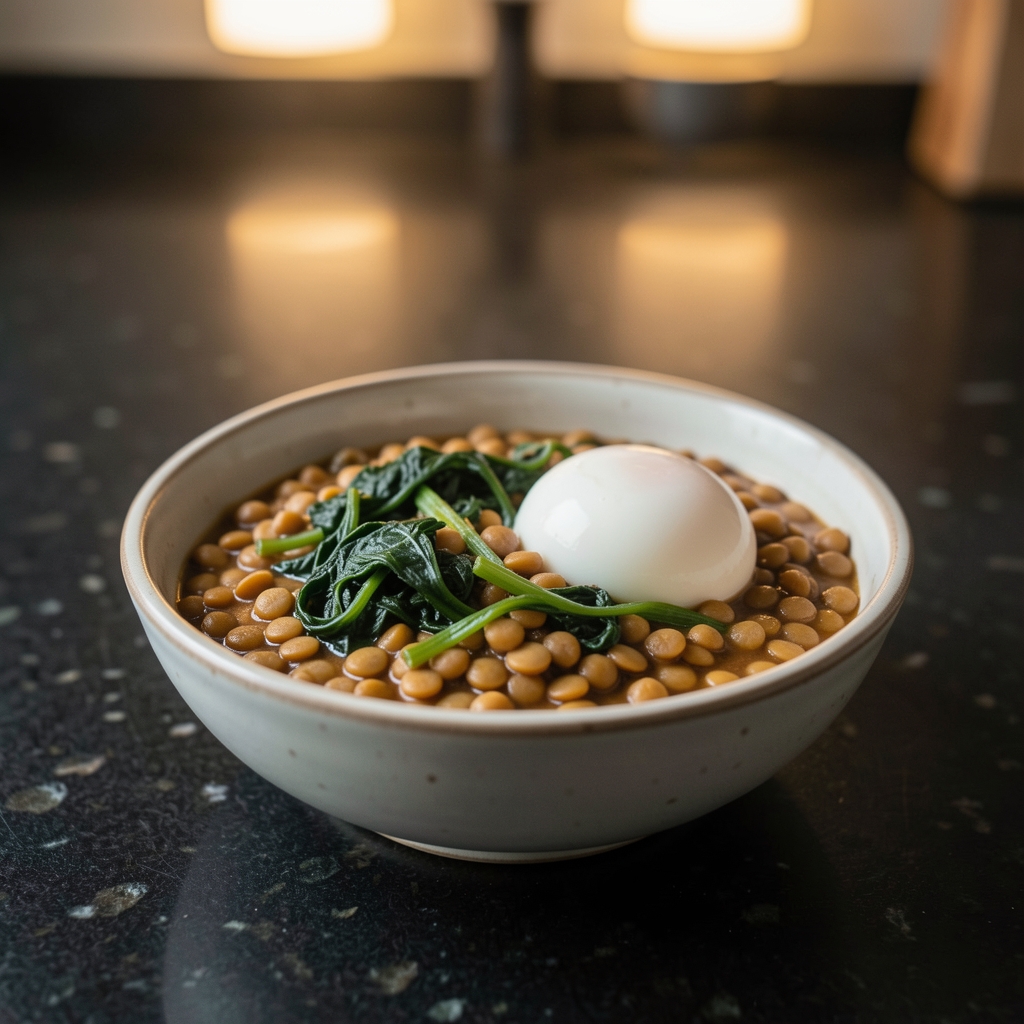
The most consistent pattern across the sixteen weeks was this: on the days following significant physical activity — a long run, a cycling session, a sustained period of physical work — the notes recorded a marked increase in appetite for protein-adjacent foods and for foods with a sense of density or substance: eggs, pulses, hearty grains, slow-cooked legumes. This appetite was not manufactured by prior planning; it arose naturally from the body's response to the previous day's activity.
What the meal planning practice added to this natural appetite was the availability of the right foods at the moment the appetite arose. When the week had been mapped in advance, and the day after a significant activity had been provisioned accordingly, the appetite found its corresponding food without the need for improvised shopping or compromised alternatives. The planning did not create the appetite; it simply ensured that the appetite was met with something worth meeting it.
Whole Foods and the Economics of Planning
One of the persistent objections to meal planning in popular discussion is the cost: both the financial cost and the time cost of provisioning a week in advance. The field notes addressed this objection not by refuting it directly but by observing what actually happened over sixteen weeks in a household operating on a moderate food budget in central London.
The finding was counterintuitive to the participants themselves. The weeks in which a meal plan had been mapped in advance consistently produced less food waste than the weeks without a plan. Less waste meant, in practice, a lower effective cost per meal despite a slightly higher cost at the point of shopping. The whole foods that anchored the planned weeks — grains, pulses, root vegetables, whole cuts of protein — are, in their unprocessed forms, among the most cost-efficient foods available when purchased with a specific sequence of use in mind.
The time cost is more complex. The initial mapping of a week's meals does require a period of attention — typically, the field notes suggest, between fifteen and thirty minutes on a Sunday afternoon. This investment is returned across the week in the elimination of the daily decision about what to prepare, which the published research on decision fatigue suggests carries a cognitive cost that accumulates over a working week.
Mindful Eating Within a Planned Structure
A reasonable concern about meal planning is that it might introduce a kind of rigidity that runs counter to the attentive, present engagement with food that the published literature associates with more satisfying eating experiences. The field notes addressed this concern directly by asking participants to record not just what they ate but how they experienced the eating of it.
What emerged was a distinction between the planning of what to eat and the eating of what had been planned. The planning — the week-level structural mapping — could be done with the attentiveness appropriate to planning: with a view to variety, balance, and the sequence of days ahead. The eating, freed from the need to make simultaneous decisions about what to prepare, could be given its own kind of attentiveness: present, unhurried, engaged with what was on the plate rather than with what should be.
This separation of structural planning from attentive eating turned out, in practice, to be mutually supporting rather than contradictory. The planned week freed the individual meals from being sites of decision; the attentive meals gave the plan its purpose. The two practices together produced what the field notes describe, in the language available to them, as the most satisfying sustained period of eating that the participating households had experienced in the observation window.
- ● Approaching the week as a compositional unit rather than a sequence of separate days reveals structural efficiencies in ingredient use, portion distribution, and shopping that are not visible meal by meal.
- ● Portion awareness in a planning-oriented kitchen is a matter of distribution across the week's varied activity and energy demands, not a matter of restriction at individual meals.
- ● Whole food provisioning in advance consistently produces less waste than unplanned shopping, making it more cost-efficient over a week despite a higher initial outlay.
- ● Structural planning and attentive eating are mutually supporting: the former frees each meal from being a decision site, allowing the latter its full quality of engagement with what is on the plate.